The Cooper Union
Pedagogy
Lancaster is Assistant Professor of Contemporary Art History specializing in LGBTQ+ art practices, theories, methodologies, and movements in the Faculty of Humanities and Social Sciences at Cooper Union.
Lancaster teaches courses on contemporary queer and trans art practices and theories, as well as foundational art history courses designed for first year students in the School of Art—courses which they re-designed to foreground global and decolonial approaches.
Lancaster’s teaching emphasizes active, student-centered approaches to help students discover how visual objects operate culturally, socially, and politically in local and global contexts. They guide students through the intellectual frameworks and methodologies of art history and visual studies, cultivating their development of scholarly and creative research projects motivated by critical inquiry. Lancaster is also committed to methods of contract and specifications grading—equitable assessment models that reward risk-taking and measure success according to effort and engagement.
Courses - History & Theory of Art
-
Aligning with the political aims of queer and trans movements, contemporary queer and trans artists develop particular tactics for subverting heteronormative and cisnormative conventions of making and viewing art. These visual and material strategies certainly assert queer and trans subject positions, but they also shift how art is made and encountered by queering and transing particular formal properties, methods of production, and the contexts and conditions of a viewing experience. While trans is often subsumed under the category of queer, trans imperatives and art practices offer distinct concerns related to gender and sexed embodiment—material experiences shaped by systemic racism, colonialism, capitalism, and ableism. These imbricated forces guide our investigation of queer and trans practices including archival and historical interventions, public intimacies and activism, craft, formalism, drag, diasporic aesthetics, environmental entanglements, and more-than-human affinities. Course readings combine queer and trans perspectives in art history and visual studies with writings by artists. Student projects will apply and extend queering and transing practices in creative and written formats.
-
This course focuses on conversations between queer art practices, queer studies of contemporary art, and queer theory. The term “queer” is mobilized to both rework the slur of shame and injury into a term of self-identification and non-normative political positioning, and also as a critical questioning of the norms and categories of sexual identity and practice (“queering”). Queer theory has direct import for the study of contemporary art, as many of its key concepts have been developed in and through the visual, and scholars have taken up issues of gender, sexuality, and sexed embodiment as central to the formation of art historical narratives and their exclusions. In turn, queer artists contribute to queer theory by appropriating and contesting conventional art practices, mediums, and histories in order to visualize and produce alternatives.
Rather than presenting a genealogical history of queer art, this course explores key theoretical texts that have shaped contemporary queer art practices, and at the same time, how queer art practices operate as their own theoretical propositions and interventions. This course also focuses on how the political aims of queer art and theory are crucially shaped by intersections of critical race, postcolonial, transgender, class, and crip politics. Investigating visual practices of queering as they intersect with queer theories and studies of contemporary art, we explore critical concepts and visual tactics that include abstraction, archival interventions, camp, disidentification, ecologies, performativity, necropolitics, public feeling, and worldmaking.
Acknowledgements
Cultivating queer lives and worlds requires an ongoing practice of thinking-with, being-with, feeling-with others. In this class, we will develop citational skills as necessary ethical and political praxis. The conceptual framing and assignments of this course were inspired by the teaching and courses designed by Jill Casid. -
How do contemporary trans artists and cultural producers contribute to the expanding field of transgender studies; and further, how do their aesthetic strategies shape our critical understandings of "trans"? Rather than a category of appearance or stable identity, trans aesthetics describes visual, material, and corporeal strategies for engaging with the world and making new things possible. In this class, trans does not merely describe the content of an artwork or text, but rather the unstable experiences of sense perception called aesthetics. This course offers a dynamic object-focused and theoretically robust approach to current trans visual practices, rather than a history of transgender representation. We will study the work of artists, writers, and makers who mobilize aesthetic tactics that help us to engage with radical trans fugitivity, multiplicity, and wildness. We will focus on themes that are central to trans, trans-of-color, and trans feminist visual studies: visibility, surveillance, and abstraction; narrative storytelling and historical reimagining; affect, materiality, and corporeal unmanageability; biopolitics, ecologies, and necropolitics.
-
While abstraction constitutes a shaping force in contemporary politically-driven art practices, scholarship, and theory--where the terms such as "queer abstraction" and "Black abstraction" now circulate--abstract art vexes our efforts to describe and interpret the political operations of this work. Abstraction offers crucial tools for minoritarian artists to refuse the demand that they transparently represent themselves in their work, sidestepping straightforward representation in favor of formal and material experimentation. Yet this work is often not taken seriously for its aesthetic invention or its political operations. This course introduces students to a range of scholarship and art historical precedents for understanding abstraction as a political force in contemporary art. Texts focus particularly on the queer, trans, feminist, critical race, and postcolonial contributions to the study of abstraction in art theory and practice, and students will develop their own approaches to the politics of abstraction through individual research.
-
This is the second of a two-semester core course in the History and Theory of Art, developed as part of the Foundation year for students in the School of Art but open to all students. These courses provide an introduction to art history as a scholarly field and a set of practices for studying the visual world, where students will use methods and theories of art history in order to think and write about art from critical perspectives. Organized thematically rather than chronologically, HTA 101 and 102 each introduce students to a range of critical issues and interpretive frameworks that have shaped histories of art since the early modern period. These courses also approach the history of museums and the institutional framing of artworks from critical perspectives: students will study exhibition strategies and curatorial approaches at major museums in New York City.
This course (HTA 102) is organized around core themes that have shaped 20th and 21st century art, including the incorporation of mass media and popular cultures; conceptualism and the extension of artworks beyond objecthood; radical deployments of unconventional materials and bodily performance; art contributing to feminism and Civil Rights movements; diasporic experience and globalization. Major tendencies such as Pop art and Institutional Critique are engaged both locally and globally, understanding that art of the United States is not insular but shaped by transcultural and increasingly global exchange. This course also introduces students to a wide range of art historical methodologies and theoretical models that are used to engage with modern and contemporary art, including Marxism, feminism, critical race and postcolonial studies, queer theory, structuralism and poststructuralism.
-
This is the first of a two-semester core course in the History and Theory of Art, developed as part of the Foundation year for students in the School of Art but open to all students. These courses provide an introduction to art history as a scholarly field and a set of practices for studying the visual world, where students will use methods and theories of art history in order to think and write about art from critical perspectives. Organized thematically rather than chronologically, HTA 101 and 102 each introduce students to a range of critical issues and interpretive frameworks that have shaped histories of art since the early modern period. These courses also approach the history of museums and the institutional framing of artworks from critical perspectives: students will study exhibition strategies and curatorial approaches at major museums in New York City.
This course (HTA 101) is organized around themes emerging from global histories of art and visual culture, focusing on works produced prior to 1900. Themes address museum institutions and the politics of display; the power at play in representing and categorizing human bodies; how art has been used to comprehend the world in the context of imperialism and globalization; and the transcultural flows of objects and images as vehicles of power and knowledge production. Course content balances global approaches to works produced across international cultural contexts alongside critical approaches to European and American art that address the shaping power of colonialism, race, gender, sexuality, and disability.
University of South Carolina-Upstate
Campus Talks
As a nonbinary trans professor and interdisciplinary specialist in contemporary art, visual culture, and gender and sexuality studies, Lancaster was often invited to give campus talks related to transgender and queer identity and the politics of representation. Lancaster also lead pedagogy workshops, including innovations in grading models and attention to gender as a shaping force in the classroom.
“Gender and Sexuality in the Classroom: The Power of Pronouns,” Friday Focus Panel Discussion, Center for Women’s and Gender Studies, February, 2022.
“Reimagining Grades: Contract and Specifications Grading,” Center for Academic Innovation and Faculty Support workshop on “Grading and Growth Mindset,” Oct. 19, 2021.
“Queer and Transgender Representation in Rotterdam,” opening night lecture and Q&A, Theater Program, February, 2021.
“Gender Identity in the Classroom,” Diversity Workshop Series, School of Education, October, 2020.
“Race, Gender, and Lemonade: Beyoncé’s Re-Formation of Art History,” Center for Women’s and Gender Studies, March 2019. Awarded Multicultural Program of the Year, 2018-2019.
As Assistant Professor of Art History from 2018-2023, Art History minor coordinator, and Gallery Director from 2021-2023, Lancaster taught courses on modern and contemporary art, primarily working with students in the Art Education and Graphic Design programs.
Courses
-
focuses on art since 1960, examining a broad range of postmodern visual practices both within the United States and globally. Terms such as contemporary and postmodern not only define art production in the late 20th and 21st centuries, but also refer to a set of ideas that informed this work—theories often presumed to belong to a Western context. Thus, one objective of this course is to develop and question intellectual models that help us engage contemporary art, including the critical approaches that consider the histories and ethical dilemmas of this field, such as postcolonialism, critical race studies, feminism, and queer theory. The course is organized according to broadly-defined movements and their conceptual frameworks, from Fluxus and Neo-Concrete art to more fluidly defined and conceptual production in photography, performance, video, installation, and digital art.
-
focuses on artwork produced at the ends of modernism and the beginning of the postmodern era. This course examines the broadly defined movements that participated in the social and political changes throughout the 20th century such as Dada and Fluxus, tendencies such as expressionism and abjection, and explicitly activist work responding to global wars, feminism, and civil rights movements.
-
What does it mean to view the history of art from a feminist perspective? How do issues of gender—along with race, class, sexuality, disability, and other intersections of difference—affect the production, reception, and interpretation of art? Since the late 1960s, feminist art historians and critics have investigated the dominant historical narratives of art to reclaim women’s voices, and worked to foreground the contributions of women artists. Feminist artists have used their work to address social issues related to representations of the body, sexist violence, racism and civil rights, and have contributed largely to the contemporary visual strategies known as “postmodern.” This course will introduce students to some of the most influential scholarship about gender in art, along with the major strategies of feminist art practice in the 20th and 21st centuries across multiple contexts both within the US and internationally.
-
What does it mean to take an anti-racist approach to the history of “American Art,” and how is this history told from the perspective of Black Americans? This class focuses on the contributions of African American and Black artists to the history of modern and contemporary art in the United States, along with the scholarship that has shaped this field since the Civil Rights Movement. We will explore how artists grapple with complex issues of African American history and identity, confront racism and inequality, and how art functions culturally, socially, and politically in relation to issues of race and power along with gender and sexuality. Students leave with a critical framework for interpreting and discussing issues of blackness and race in US art, understanding how Black artists have shaped the art and culture of the United States.
-
focuses on modern and contemporary forms of graphic design since the 19th century. We will contextualize graphic design styles and forms in terms of their social, cultural, and political contexts nationally and internationally in order to understand how graphic design shapes our visual worlds. We will explore how graphic design operates in various ways as a tool for communication, transcultural exchange, propaganda and persuasion, social consciousness and protest. The core philosophy of this class is that forms have histories: in order to understand how these forms are used to create meaning in the world around you—and if you are a designer, to responsibly utilize graphic forms in your own work—it is crucial to understand their historical and cultural significance.
-
an introduction to the history of photography from its origins in the 19th century to the present, tracing the development of photographic technologies and aesthetics alongside their social and political operations. We will explore the range of photography’s cultural practices, including the production and use of photographs as evidence, as storage devices for data and memories, as agents of social change, as vehicles of desire and fantasy. We will consider the central problems of photography’s documentary status, and the relations of power implicit in making and looking at photographs. Students will leave this course with an understanding of the history of a medium that proliferates in our public and private lives, and the ability to critically analyze and interpret those images.
-
an introduction to the methods and theoretical tools of art history, focusing on those used most by contemporary art historians, curators, and critics while also considering the history of the field as a whole. Students will practice looking at, discussing, and writing about works of art utilizing the major intellectual models that form the field of art history today, from semiotics to poststructuralism, and focusing especially on feminist, critical race, postcolonial, queer and transgender, and disability studies perspectives. We will consider a wide range of interpretive approaches, comparing and testing the various frameworks that help us to analyze and understand how art works socially and politically.
Student Projects
Virtual Exhibition
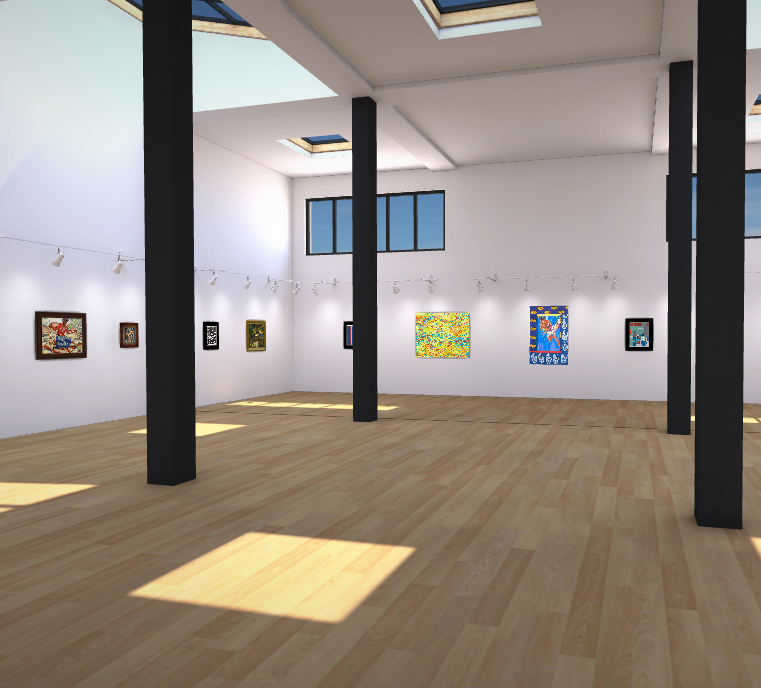
Students in Lancaster’s African American Art class curated a virtual reality exhibition of artworks from the Johnson Collection in Spartanburg, SC: Visualizing Black Southern Life & Freedom Struggles. [Spring 2022]
Received a Culture, Race, Ethnicity, and Gender Grant from the Provost’s office and Diversity Centers at USC Upstate.
Outdoor Sculpture Tour
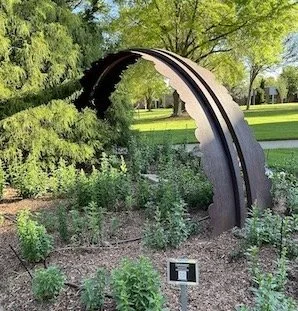
Students in Lancaster's 20th Century Art class created an audio/written tour of outdoor sculptures at USC Upstate.
Students used their knowledge of art history to write and record audio guides for ten sculptures on campus. Visitors can scan QR codes on their labels to hear or read the student's interpretation. [Fall 2019]
Research Journal Publication
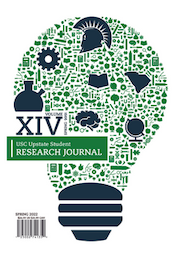
Lancaster’s independent study student published their research paper, “Kawaii Revolution: Understanding the Japanese Aesthetics of ‘Cuteness’ through Lolita and Madoka Magica,” in the USC Upstate Student Research Journal, 2022.
Berea College
Visiting Assistant Professor, Art and Art History, 2017-2018
-
Description text goes here
-
traces major themes that emerge from the imbricated development of performance, video, and new media installation art since 1960. These developments constituted a radical revision of the object of art, as artists begin using their bodies, time, and space as the medium of their work. We will discuss major movements including Fluxus, Happenings, Actionism, and tendencies such as endurance, ritual, mirroring, and abjection, exploring multiple interpretive models to engage this work across art history and critical theory. Locating these artistic developments in the context of contemporary social and political movements—including feminism, civil rights, postcolonialism, and queer approaches—we will consider how the body has been performed and politicized for the camera, and examine how artists responded to mass media and popular culture in the postmodern era.
-
Senior Capstone Seminar
Examines the role of visual arts and cultures in making and shaping our contemporary globalized world. We take up the global as a shifting terrain formed by visual tactics of power, resistance, and transformation. Rather than imagine a single unified global visual culture, we will explore multiple approaches to visualizing our lives and worlds in the wake of globalization. We will explore multiple conceptual frameworks for approaching global visual cultures, and models for thinking about cultural difference and mixture. We will examine experiences of migration and exile, cultural identity, and visual tactics of self-representation and survival in the aftermath of colonization. Students will leave this seminar with a firm grasp of global visual culture studies, understanding how our global visual worlds are shaped by difference and multiplicity, and develop their own global lens for analyzing the visual media that actively shape our world.